
Buying a House in Formentera: Taxes, Legal Requirements and What International Buyers Need to Know
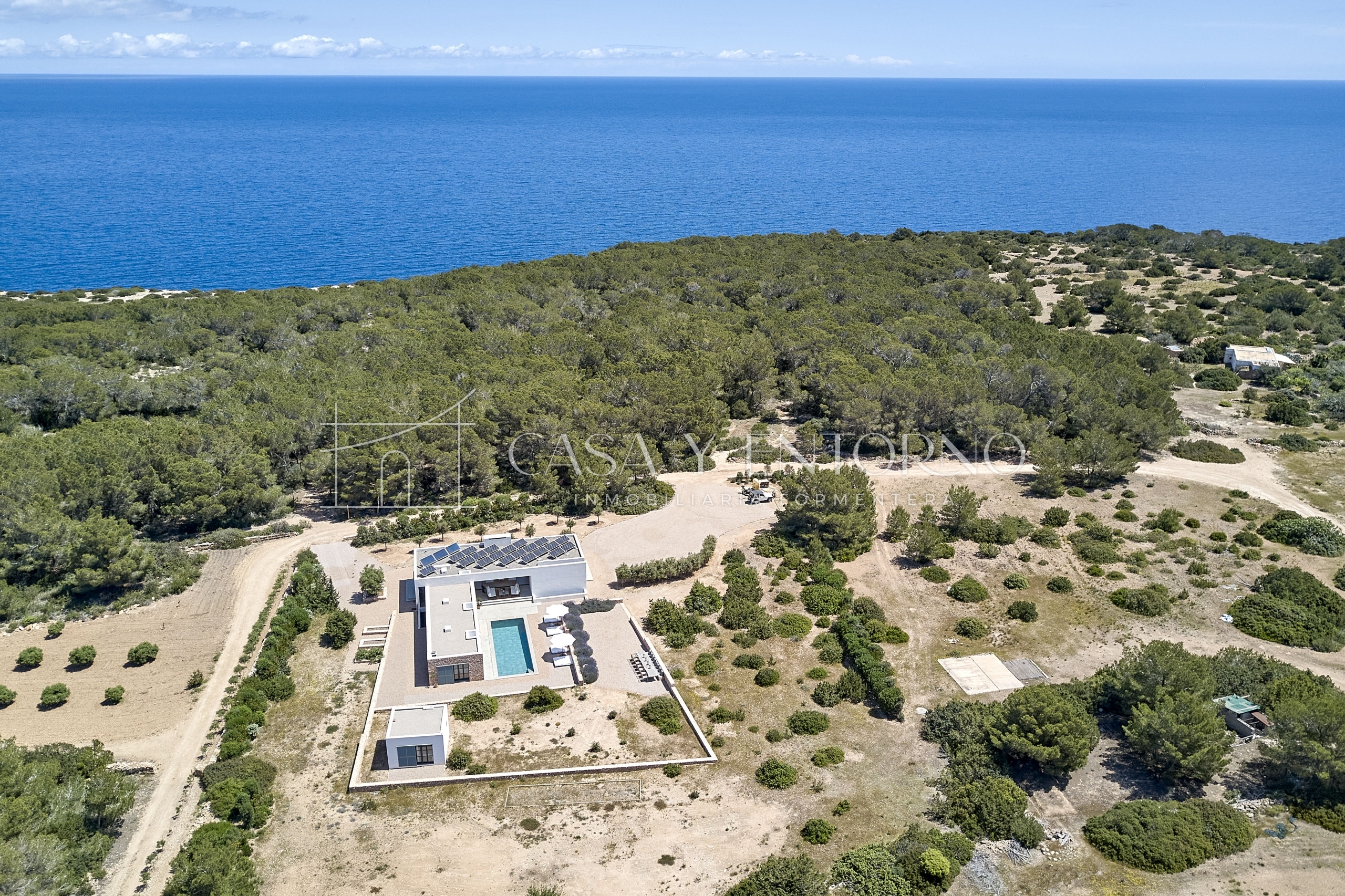
The Complete Guide to Buying Property in Formentera: Spanish Taxes, NIE, Purchase Costs and Tax Obligations for Non-Residents
Important Disclaimer
This article is based exclusively on information published by official Spanish government authorities. It is provided for informational purposes only and does not constitute legal, tax or financial advice.
If you are buying property in Formentera as a foreign buyer, you may also have tax obligations in your country of residence. These vary depending on your nationality and tax residency. For advice on your personal situation, always consult a qualified tax adviser in your home country.
Buying Property in Formentera: Understanding the Spanish Tax System
Buying a house, villa or apartment in Formentera is a real estate transaction carried out entirely under Spanish law.
The taxes you must pay, the administrative procedures you must complete and the official forms you must submit are the same for every foreign buyer who is not a Spanish tax resident, regardless of nationality.
This guide focuses exclusively on the Spanish side of the purchasing process.
All information has been taken directly from official government sources, including:
- Agència Tributària de les Illes Balears (ATIB)
- Spanish Tax Agency (Agencia Tributaria – AEAT)
- Spanish National Police (Policía Nacional)
Every figure and requirement can be verified through the corresponding official source.
Step 1. Obtaining Your NIE (Foreigner Identification Number)
The NIE (Número de Identidad de Extranjero) is the personal tax identification number issued by the Spanish government to foreign nationals who have an economic, legal or professional relationship with Spain.
If you are planning to buy property in Formentera, obtaining an NIE is mandatory.
Without an NIE you cannot:
- sign the public deed of purchase before a Spanish notary;
- open a Spanish bank account;
- pay property taxes in Spain;
- complete most administrative procedures related to buying real estate.
How to Apply for an NIE
Applicants must provide:
- EX-15 application form, available from the official website of the Spanish National Police.
- Form 790 – Code 012, used to pay the government fee.
- Documentation explaining the reason for the application, such as a reservation agreement or purchase contract.
Applications may be submitted in three different ways.
In Spain
At an authorised Foreigners' Office (Oficina de Extranjería) or designated National Police station, by prior appointment.
From Your Home Country
Through the Spanish Consulate responsible for your place of residence.
Through an Authorised Representative
A legal representative holding a specific notarised power of attorney may submit the application on your behalf.
Official Source
Spanish National Police – Electronic Headquarters
Section: "Extranjería / Asignación de NIE a instancia de interesado"
How Long Does It Take?
Under Spanish law, the official processing time is five working days from the date the competent authority receives the application.
In practice, processing times usually vary depending on administrative workload:
- 5–15 days when applying in Spain.
- 2–6 weeks through Spanish Consulates abroad.
Official Source
Spanish National Police Electronic Headquarters:
"The procedure must be resolved within a maximum period of five working days from receipt of the application."
Step 2. Property Transfer Tax (ITP)
If you are purchasing a resale property in Formentera, the main tax payable is the Property Transfer Tax (Impuesto sobre Transmisiones Patrimoniales – ITP).
This tax is administered by each Autonomous Community.
In the Balearic Islands, the applicable rates follow a progressive system established by Law 12/2023 (Regional Budget Law), effective from 1 January 2024.
Official Source
Agència Tributària de les Illes Balears (ATIB)
How Is Property Transfer Tax Calculated?
Unlike a flat-rate tax, the Balearic Islands apply a progressive tax scale.
Each property value falls into a specific band.
The calculation combines:
- the fixed amount corresponding to previous tax bands; and
- the percentage applied only to the portion exceeding the previous threshold.
This means the highest rate applies only to the amount within that specific band, not to the property's entire purchase price.
Practical Example
Suppose you buy a property in Formentera for €800,000.
The calculation would be:
- First €400,000 × 8% = €32,000
- Next €200,000 × 9% = €18,000
- Final €200,000 × 10% = €20,000
Total Property Transfer Tax: €70,000
Effective tax rate: 8.75%.
Reduced ITP Rates: Who Qualifies?
The Balearic Tax Agency offers reduced Property Transfer Tax rates of 4%, 2%, and in specific circumstances even a 100% exemption.
These benefits are generally available only for buyers who meet specific legal requirements, including:
- purchasing their primary residence;
- being officially resident in the Balearic Islands;
- buyers under the age of 36;
- large families;
- people with recognised disabilities.
In most cases, foreign buyers purchasing a second home in Formentera while remaining non-resident in the Balearic Islands do not qualify for these reduced tax rates.
Official Source
Agència Tributària de les Illes Balears (ATIB).
Step 3. VAT (IVA) and Stamp Duty (AJD): Only for Newly Built Properties
If you are buying a new-build property in Formentera, meaning a home purchased directly from the developer as its first sale, a different tax regime applies.
Instead of Property Transfer Tax (ITP), buyers must pay:
- VAT (Value Added Tax – IVA):
- 10% on residential properties.
- 21% on building plots and developable land.
- AJD (Stamp Duty – Actos Jurídicos Documentados):
- In the Balearic Islands, the general rate is 1.2% of the value stated in the notarial deed.
Official Source
Spanish VAT legislation and the Balearic Islands' regulations governing AJD.
In reality, the Formentera property market is made up predominantly of resale villas, fincas and existing homes, meaning that Property Transfer Tax (ITP) remains the tax most international buyers will encounter.
Step 4. Additional Costs When Buying Property in Formentera
Besides taxes, purchasing real estate in Spain involves several additional costs that every buyer should take into account.
These expenses apply regardless of nationality or tax residency.
Notary Fees
Every Spanish property purchase must be completed before a Spanish Notary Public, who prepares and authorises the public deed of sale.
Notarial fees are regulated by official state tariffs rather than being freely negotiated.
The final cost depends on several factors, including:
- the purchase price;
- the complexity of the transaction;
- the number of documents executed.
Property Registry Fees
Once the deed has been signed, ownership should be registered with the Spanish Land Registry (Registro de la Propiedad).
Registration provides legal certainty and officially records the buyer's ownership rights.
Registry fees are also regulated by law and are calculated according to the property's value.
Administrative Services (Gestoría)
Many buyers appoint a Gestoría, a specialist administrative firm that manages the post-completion formalities.
Typical services include:
- filing tax returns related to the purchase;
- paying taxes on the buyer's behalf;
- submitting documents to the Land Registry;
- handling administrative procedures after completion.
Fees vary depending on the services requested.
Important Note
At the time of writing, there is no official primary government source confirming fixed percentage costs for notary or Land Registry fees in the Balearic Islands for 2025.
The figures often quoted by property websites (typically around 1% each) are market estimates, not officially established rates.
The applicable legislation remains:
- Royal Decree 1426/1989 (Notarial Fees).
- Royal Decree 1427/1989 (Land Registry Fees), together with subsequent amendments.
Step 5. Non-Resident Income Tax (IRNR)
After purchasing a property in Formentera, owners who are not tax residents in Spain may have ongoing tax obligations under the Spanish Non-Resident Income Tax (IRNR).
These obligations are generally fulfilled using Form 210 (Modelo 210).
If the Property Is Not Rented Out
Even if the property generates no rental income, Spanish tax law may require non-resident owners to declare an imputed income (renta imputada).
This notional taxable income is calculated using the property's cadastral value (valor catastral).
The taxable base is:
- 1.1% of the cadastral value if it has been revised during the previous ten years.
- 2% if no cadastral revision has taken place during that period.
The applicable IRNR tax rate is:
- 19% for tax residents of the European Union (EU) or the European Economic Area (EEA).
- 24% for tax residents outside the EU/EEA.
Official Source
Spanish Tax Agency (AEAT)
Official instructions for Modelo 210.
If the Property Is Rented
Rental income generated by property located in Spain is taxable in Spain, regardless of where the owner lives.
This income must also be declared using Modelo 210.
Tax Rates
- 19% on net rental income for residents of the European Union or European Economic Area.
- 24% on gross rental income for residents outside the EU/EEA.
Deductible Expenses
EU and EEA residents may deduct certain expenses directly related to the rental activity, including:
- maintenance and repair costs;
- mortgage interest;
- depreciation;
- other deductible expenses permitted under Spanish tax legislation,
provided these expenses relate proportionally to the period during which the property was rented.
In general, non-EU/EEA residents are taxed on their gross rental income, without being entitled to deduct these costs.
Official Source
Spanish Tax Agency (AEAT)
Non-Resident Property Taxation.
Royal Legislative Decree 5/2004 (Consolidated Non-Resident Income Tax Act).
Step 6. IBI (Annual Property Tax)
The IBI (Impuesto sobre Bienes Inmuebles) is Spain's annual municipal property tax.
It is broadly comparable to Council Tax and property taxation systems in the UK, local property taxes in the United States, or similar municipal real estate taxes in many other countries.
IBI applies to every property owner, whether resident or non-resident.
Each municipality sets its own tax rate.
In Formentera, the competent authority is the Consell Insular de Formentera.
At present, it is not possible to confirm the exact IBI rate currently applicable in Formentera through a verifiable primary government source.
For the latest information, buyers should contact the Consell Insular directly or consult its official tax portal.
Official Source
Consell Insular de Formentera – Tax Department.
Summary: Taxes and Costs When Buying Property in Formentera
Tax or Requirement | When It Applies |
NIE | Before signing the purchase deed |
Property Transfer Tax (ITP) | Purchase of resale property |
VAT + AJD | Purchase of new-build property |
Notary Fees | At completion before the notary |
Land Registry Fees | Registration of ownership |
Administrative Fees (Gestoría) | After completion |
Non-Resident Income Tax (IRNR – Modelo 210) | Annual tax obligations for non-residents |
IBI | Annual municipal property tax |
Thinking About Buying Property in Formentera?
Buying property in Formentera is a significant investment, and having experienced local professionals by your side can make the entire process smoother and more secure.
For more than 30 years, Casa y Entorno has specialised exclusively in the Formentera real estate market, helping international buyers find their ideal home while connecting them with trusted legal, tax and property professionals.
Whether you're searching for a holiday home, a luxury villa, a seafront property, or a long-term investment in the Balearic Islands, our local expertise can help you buy with confidence.
Contact Casa y Entorno today and discover our exclusive selection of properties for sale in Formentera.