
Formentera and the Shadow of the Past: Myths and Reality of Former Nazi Officers in the Post-War Period
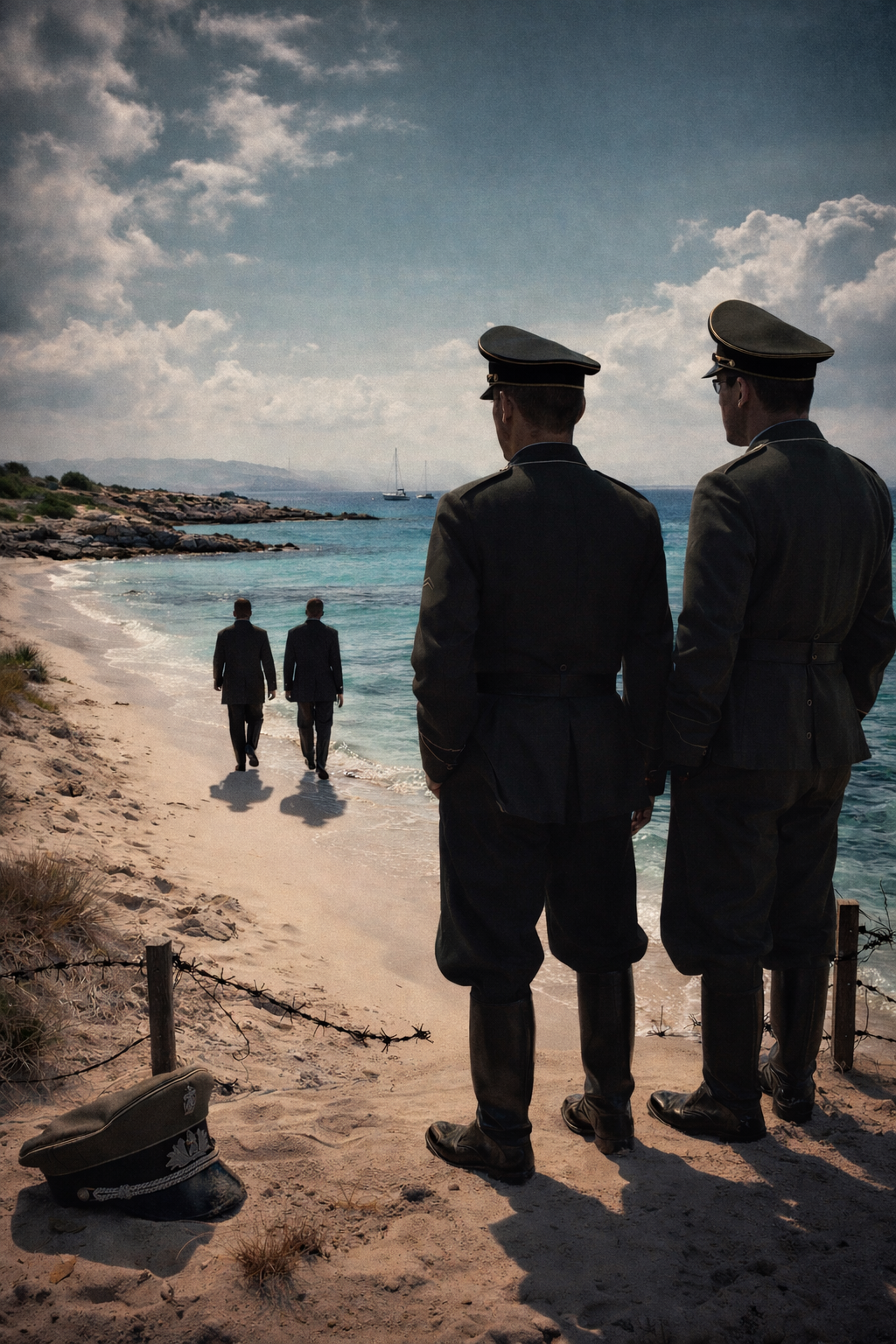
Formentera is universally known as an oasis of peace and pristine beauty. But, like any place with a deep history, even this small Balearic island has occasionally been the setting for complex, sometimes dark narratives that intertwine with broader historical events. Among the most persistent and controversial is the legend of the presence of former Nazi officers in Formentera after World War II—figures who allegedly found a quiet refuge in the Balearics.
It is a secret story made of whispers, conjectures, and occasional testimonies, set within the broader context of the Nazi "ratlines." Let us explore the myths and reality of this fascinating but delicate page of controversial history.
The "Ratlines" and Francoist Spain: A Complex Context
After the end of World War II, thousands of Nazi war criminals and collaborators sought to escape justice. The so-called "ratlines" were escape networks, often organized with the help of certain elements of the Catholic Church and former Nazis, which allowed these individuals to reach safe countries, mainly in South America.
In this context, Francisco Franco's Spain played an ambiguous role. While not officially an ally of the Third Reich, it maintained ideological ties with the Axis powers. Spain offered refuge to a number of former Nazis and collaborators or served as a vital stopover on their escape routes. Madrid and other Spanish cities became transit points and, in some cases, places of residence. The Balearic archipelago, with its relative isolation and discreet beauty, could have served as an ideal location for an existence "under the radar."
The Legend of Former Nazi Officers in Formentera
The narrative of former officers settling on the island is mainly fueled by oral sources, local anecdotes, and occasional books or journalistic articles exploring these myths.
- Local Testimonies: Some older residents tell stories of seeing reserved foreigners who spoke German and lived in isolated houses, sometimes with inexplicable financial means. These individuals supposedly led a retired life, avoiding contact and questions about their past.
- The Appeal of Isolation: The extreme discretion and isolation of Formentera in the post-war period—when it was still a poor and poorly connected island—would have made it an attractive place for those wishing to disappear from international radar. Its wild beauty and the possibility of an anonymous life were strong draws.
- The Fascination of Mystery: Over time, these stories, which are not always supported by concrete evidence, have taken on the charm of a "secret" legend, fueling this controversial history.
To date, there is no irrefutably documented evidence (such as official records, judicial investigations with specific names, or verified admissions) confirming a massive presence or the identity of high-ranking former Nazi officers who settled in Formentera for a long period. Most historical studies on ratlines focus on much more structured routes and destinations.
Reality or Legend? The Allure of Hidden History
It is possible that some individuals with Nazi-linked pasts, perhaps low-profile figures or simple sympathizers, found refuge in Formentera for short periods or lived incognito for years. The atmosphere of silence (omertà) and the limited investigative capacity of the time in isolated locations would certainly have favored such situations.
However, it is essential to distinguish between possibility and historical certainty. The search for a secret history on this subject remains complex precisely because of the lack of direct sources. The truth likely lies in a gray area between legend and a few isolated, never fully proven cases.
Formentera, with its dazzling beauty, may have hidden—or at least provided the backdrop for—some of these escapes. But its identity today is that of an open, inclusive island committed to preserving its peace and nature, a place where history, even the most uncomfortable, is now approached with greater awareness.