
The Legend of Sa Cova de Sant Valero: Formentera’s Hidden Secret
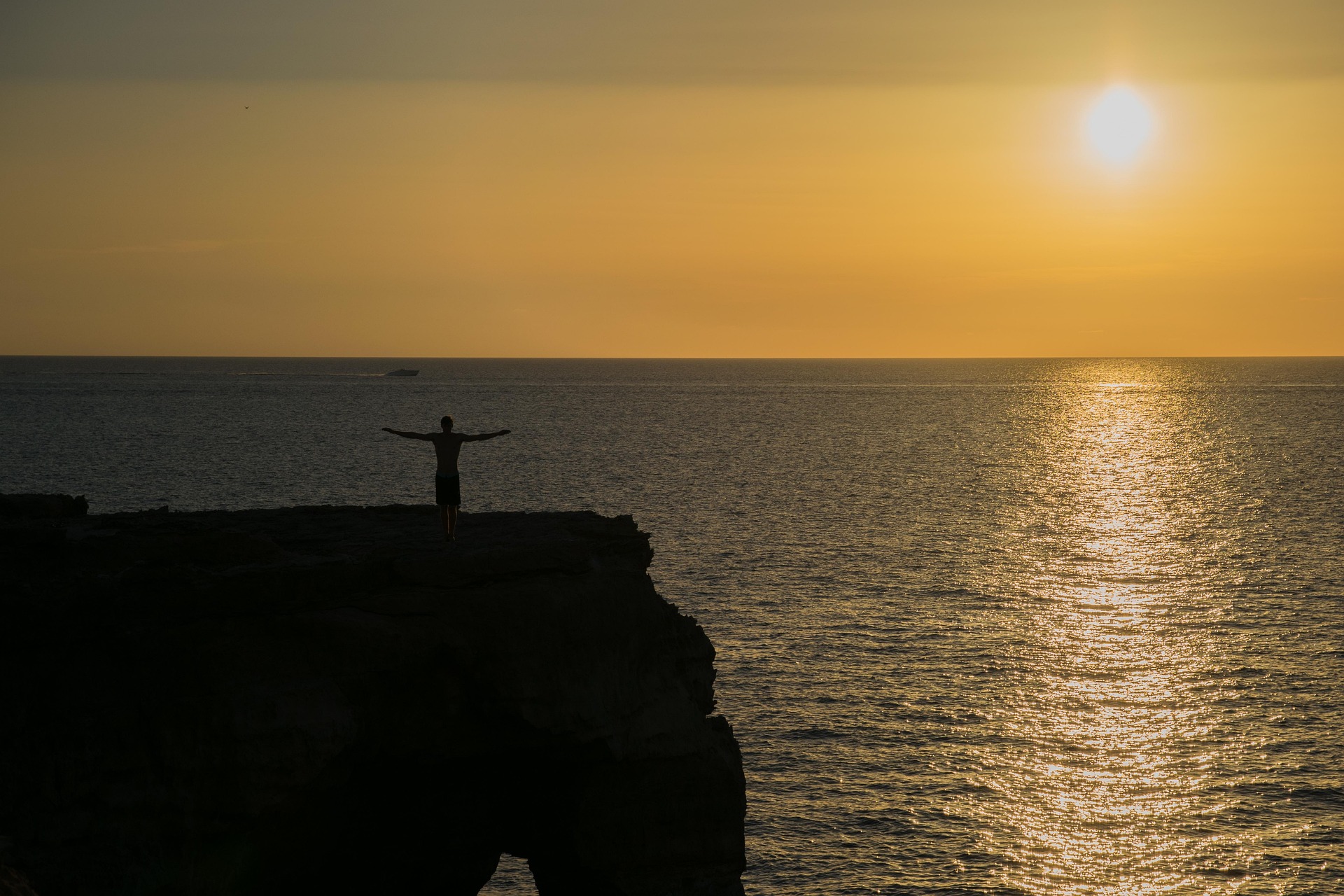
People often say that you can see all of Formentera in just a few days. Yet anyone who has known the island for years understands that this is one of the most common misconceptions about small places.
In a few days, you may see the surface of Formentera, but not the island itself.
The real Formentera has many layers: stories, legends, hidden places, secret paths and natural caves that may take years to discover—and sometimes require someone who knows the island well enough to reveal them.
Sa Cova de Sant Valero is one of those places.
Where Is Sa Cova de Sant Valero?
Sa Cova de Sant Valero is located on the southern coast of Formentera, in the wild and unspoilt area of Cap de Barbaria, between Punta de s’Agulla and Punta des Pujolet, overlooking the slope of the Torrent de Sant Valero.
The cave lies not far from the famous Cap de Barbaria Lighthouse, the white lighthouse marking the southernmost point of the island and one of the most photographed landmarks in the Balearic Islands.
Hidden within the limestone rock, the cave appears almost as though it does not want to be found.
Its main entrance, located around thirty metres from the sea, is narrow. Visitors must crouch down and crawl on all fours for several metres before the passages begin to open up.
One of the Longest Natural Caves in Formentera
Once inside, Sa Cova de Sant Valero reveals an entirely different world.
With approximately 355 metres of horizontal development, it is one of the longest known caves in Formentera.
The cave is of karst origin. Over thousands of years, water filtering down from the surface gradually eroded the limestone, creating a complex network of horizontal passages running in a north-east to south-west direction, with branches and chambers of varying heights.
What immediately strikes first-time visitors is the unusual colour of the cave formations.
The stalactites, stalagmites, columns and extremely delicate soda-straw formations hanging from the ceilings are an intense black, almost metallic in appearance.
This rare geological feature makes Sa Cova de Sant Valero instantly recognisable among the natural caves of the Balearic archipelago.
The Legend of Vicent Pepa: the Bandit and His Hideout
Every remarkable cave has its own story.
Sa Cova de Sant Valero has one of the most frequently told legends in Formentera.
According to the island’s oral tradition, a bandit named Vicent Pepa once hid within its galleries, using the cave both as a refuge and as a secret place to store his loot.
The dark tunnels, confusing branches and presence of water inside the cave made Sa Cova de Sant Valero the perfect hiding place.
Anyone unfamiliar with its passages could easily become disoriented, while someone who knew the route could disappear deep inside the rock.
The story of Vicent Pepa is not recorded in historical archives with the certainty of a documented event. It is a legend in the truest and most meaningful sense of the word: a story passed down orally from one generation to the next until it became embedded in the cultural identity of the island.
Like all enduring legends, however, it contains an element of truth.
This cave was deep enough, dark enough and far enough from the island’s inhabited areas to shelter someone who did not want to be found.
The Name, the Chapel and the Historian Who Reconstructed the Connection
There is another layer to the history of Sa Cova de Sant Valero, one that is older and less well known than the legend of the bandit.
The name Sant Valero is not accidental.
The connection between the cave and the saint was reconstructed by historian Joan Marí Cardona, widely regarded as one of the leading scholars of Formentera’s history.
According to Cardona, in the 14th century the cave may have given its name to a much wider geographical area. The surrounding territory was known as Sant Valero, and a small chapel dedicated to the saint was built within it.
That chapel still exists today, although it is now located several kilometres away from the cave.
It is the Chapel of Sa Tanca Vella, situated in Sant Francesc Xavier, the capital of Formentera.
Over the centuries, the chapel was either moved or rebuilt in its present location, but its name still preserves the connection with the original territory.
How to Reach Sa Cova de Sant Valero
Sa Cova de Sant Valero is not an equipped tourist cave like the Cova d’en Xeroni near Sant Ferran, which offers guided visits, artificial lighting and marked routes.
It is a natural cave.
Although it is accessible, it has not been adapted or organised for tourism.
Before setting out, visitors should therefore be aware of several practical considerations.
The most common way to reach the area is by travelling towards Cap de Barbaria by scooter, bicycle or car, and then continuing on foot along the southern coast.
The entrance lies on the slope of the Torrent de Sant Valero, between Punta de s’Agulla and Punta des Pujolet.
There are no signs marking the cave.
For this reason, it is advisable to carry accurate GPS coordinates or follow a previously downloaded route from a hiking platform such as Wikiloc.
What Equipment Do You Need?
Although specialised caving equipment is not normally required, proper preparation is essential.
Visitors should bring:
- a head torch with spare batteries, as there is no natural or artificial light inside;
- a helmet for sections where the ceiling is particularly low;
- closed, non-slip footwear, as the ground is damp and slippery in several areas.
The cave extends for approximately 355 metres and contains several branches.
To avoid losing their way on the return journey, some local cavers recommend using a guide rope from the entrance.
The galleries can be explored by people without previous caving experience, but this should not be treated as a casual walk.
Caution, orientation and suitable equipment are essential.
What Is the Best Time to Visit?
September and October are generally considered the best months to visit Sa Cova de Sant Valero.
During this period, outdoor temperatures are more comfortable, while the humidity inside the cave remains relatively constant throughout the year.
In summer, entering the cool cave can feel refreshing after the heat outside.
However, visitors should bring a fleece or light jacket, because the temperature inside drops sharply compared with the outdoor temperatures, which can exceed 30°C.
Why Is Sa Cova de Sant Valero Worth Visiting?
Formentera is usually associated with the surface: the sea, the beaches and the light.
Sa Cova de Sant Valero is precisely the opposite.
It is darkness.
Depth.
Silence.
Mystery.
Entering the cave after spending a morning on the white sands of Ses Illetes creates one of those dramatic shifts in perception that only Formentera can offer.
This small Mediterranean island contains completely different landscapes within just a few kilometres: turquoise waters, limestone cliffs, hidden caves, rural paths and centuries-old legends.
Sa Cova de Sant Valero reveals a lesser-known side of Formentera, far removed from the usual image of beaches and summer holidays.
It is a place shaped by geology, oral tradition, history and the island’s deep relationship with its natural environment.
Perhaps this is why so many travellers return to Formentera again and again.
Because Formentera can never be completely discovered.
Discover the Real Formentera
Would you like to discover Formentera from the inside, rather than simply admire it from the outside?
Would you like to explore its hidden places, local history, natural landscapes and the stories that form the true identity of the island?
Casa y Entorno has been helping people discover and experience Formentera for over 30 years.
Contact us at casayentorno.com/en/contact and let yourself be guided by professionals who know every corner of the island.