
The Seagulls of Formentera: Winged Companions and Symbols of their Free Spirit
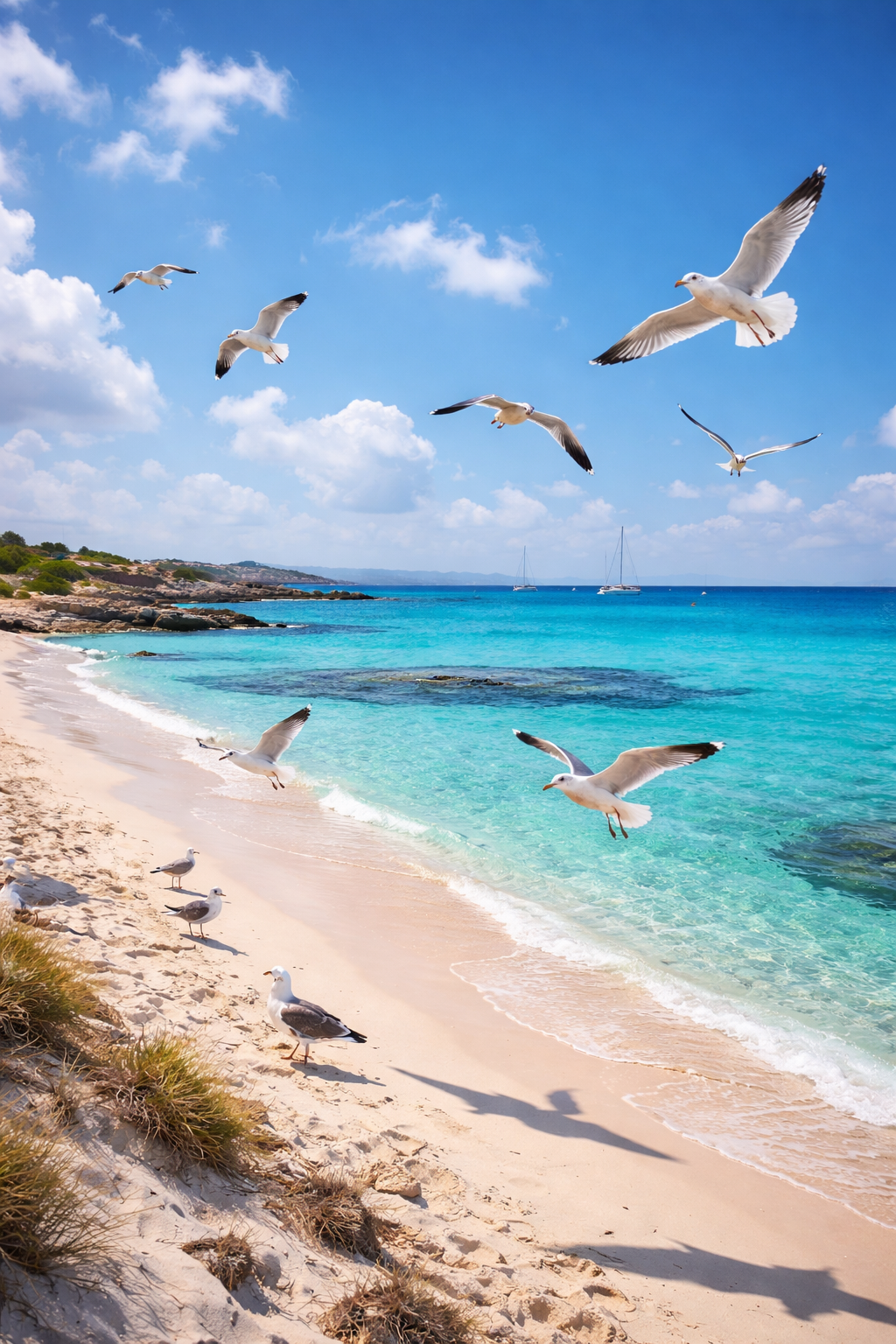
When thinking of Formentera, the mind immediately evokes the dazzling turquoise of the sea and the immaculate white of its beaches. But above this iconic landscape, another unmistakable figure animates the air and the coasts: the seagull. Seagulls are not just birds; they are omnipresent winged companions, symbols of the island's free spirit, and an integral part of Formentera’s birdlife and the entire ecosystem.
These elegant seabirds represent a visible bridge between sea and land, between wilderness and human presence. Observing them in their environment offers an authentic insight into nature and human-nature coexistence.
Seagull Species in Formentera: A Mosaic of Wings
In Formentera, as in the rest of the Balearics, the most common and easily recognizable species is the Yellow-legged Gull (Larus michahellis). Characterized by a light gray back, black-tipped wings, and a yellow beak with a red spot, it is the undisputed king of the coasts and ports.
However, with a bit of attention and a good pair of binoculars, other species can also be spotted, especially during migration periods or in winter:
- Audouin's Gull (Ichthyaetus audouinii): A rarer and protected species, with a dark red beak and dark legs, often linked to specific nesting areas.
- Black-headed Gull (Chroicocephalus ridibundus): Smaller, with a dark head during the breeding season and a more agile flight.
- Lesser Black-backed Gull (Larus fuscus): Similar to the Yellow-legged Gull but with a darker back.
These species contribute to the island's ornithological richness, making birdwatching a fascinating activity even for beginners.
A Crucial Role in the Marine and Terrestrial Ecosystem
Seagulls play a fundamental ecological role in Formentera's ecosystem:
- Natural Scavengers: They act as "cleaners" of the coasts and seas, helping to remove fish carcasses, crustaceans, and other debris, keeping the environment clean.
- Environmental Indicators: Their presence and health can be indicators of the general health of the marine environment and coastal areas.
- Food Chain: They feed on fish, marine invertebrates, and sometimes small rodents or terrestrial insects, fitting into the island's food web.
Their constant search for food leads them to frequent open waters, beaches, ports (like La Savina), and even the outskirts of town centers, where they sometimes interact with humans.
Human-Seagull Coexistence: Tips for a Harmonious Balance
Human-nature coexistence is a central theme, and seagulls are a prime example. They are intelligent and opportunistic animals, and their proximity to humans is often linked to food availability.
To maintain a healthy and respectful balance:
- Do Not Feed Them: It is essential not to feed seagulls with food scraps. This alters their natural behavior, makes them more dependent on humans, and can lead to hygiene problems or increased aggression.
- Waste Management: Ensure that waste is always in closed, inaccessible containers. Seagulls are very skilled at rummaging through bags, scattering trash.
- Respect Nests: During spring and early summer, seagulls nest in quiet areas of cliffs or secluded spots. If you spot them, keep your distance and do not disturb them.
- Responsible Observation: Use binoculars to admire these magnificent birds without invading their space. Their majesty in flight or as they settle gracefully on the waves is a sight that deserves respect.
Symbols of Freedom and Resilience
Seagulls embody the most authentic spirit of the island: freedom. With their wide wings spanning the sky, they represent the eternal connection with the sea and the ability to adapt to a changing environment. Their characteristic cries—sometimes sharp, sometimes almost melancholy—are the soundtrack to every day spent on the island, a constant reminder of nature's indomitable strength.
Watching them glide effortlessly or dive with precision to catch prey is an experience that enriches any visit to Formentera, transforming a simple landscape into a living painting of wildlife and primal beauty. They are, ultimately, the true winged guardians of the island's spirit.